Electrification of heavy-duty transport requires efforts across the entire value chain
Heavy transport charging solutions and infrastructure, as well as heavy-duty vehicles, were among the topics addressed by the interesting speeches given at the New Trends of Electrification 2024 event. The significance of the entire value chain in achieving the common goal was highlighted in the presentations given by Kempower and Neste, among others.
The New Trends of Electrification event, now held in Lahti for the second time, brought together a large number of operators in the education sector and public sector, as well as company representatives, from around the world.
The event was organised by Lahti GEM (Green Electrification of Mobility Cluster), Lahti Region Development LADEC, Kempower, Lappeenranta-Lahti University of Technology (LUT) and LAB University of Applied Sciences, as well as the Electric Mobility Research Center (EMRC) of LUT and Kempower. The speakers who came from the furthest away were from Germany and Qatar.
In his speech, CMO Jussi Vanhanen of Kempower, a Lahti-based company that develops charging solutions for heavy-duty vehicles, looked to the future of the electrification of traffic. He said that, by 2030, more than 50 per cent of the trucks manufactured by Daimler, Volvo and Traton will be sold with an electric engine.
- “Our goal is to develop the most desirable heavy-duty transport charging solution in the world that will serve drivers both during transport and at terminals. However, the common goal of electrifying heavy traffic requires actions across the entire value chain. In order for the vehicle fleet to be renewed with sufficient efficiency, the investment and operating costs must be made known to transport industry entrepreneurs more clearly.”
Head of Strategy & PMO of Neste Jani Ekman also commented on the development of both the vehicle fleet and the charging network.
- “The average age of the Finnish heavy-duty vehicle fleet is 15 years, and statistics indicate that only three per cent of all trucks will be electric by 2030. Biodiesel and renewable hydrogen produced with green electricity, which serve the existing fleet, play an important role in combatting global warming. In order to achieve our emissions targets, we require several environmentally friendly fuel options.”
CEO of Algosystems Mo´ath Mohammad Al-Omari talked about the challenges faced by Middle Eastern countries in the electrification of heavy traffic. In Qatar, Saudi Arabia and the United Arab Emirates, where the temperature may rise up to 50 °C during the day, the batteries used in heavy-duty vehicles must be particularly durable. Despite this, as much as 73 per cent of the public transport in Qatar runs on electricity.
- “For the time being, the main challenge posed in our country and other countries with regard to the electrification of heavy traffic is the limited charging network available for heavy-duty vehicles,” remarked Al-Omari.
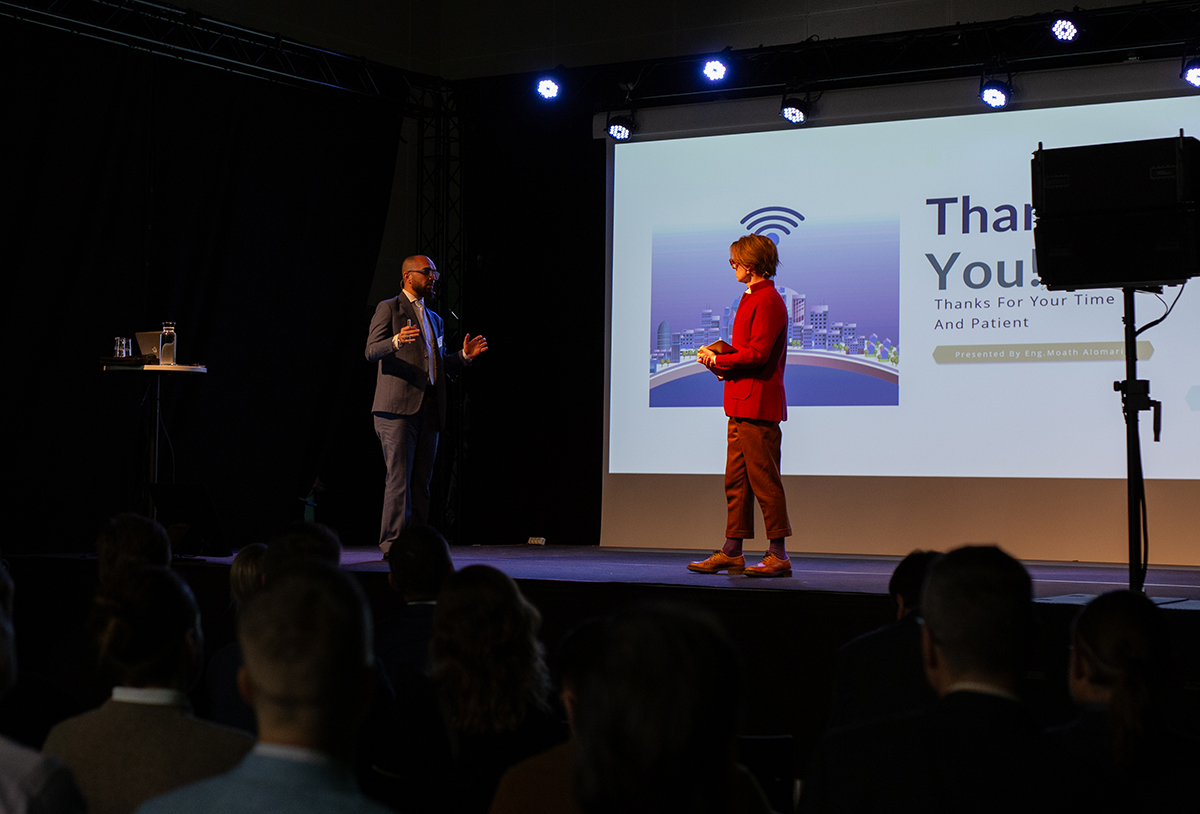
The host of the event, Professor of Practice Sami Sykkö (on the right) from LUT University, discussed the electrification of heavy-duty transport with CEO of Algosystems Mo´ath Mohammad Al-Omar.
Eye-opening speeches
Despite the challenges highlighted in many of the speeches at the event, Director Ville Naumanen of the Lahti-based EMRC has strong faith in the electrification of heavy-duty transport.
- “The event was very successful and eye-opening. I particularly liked that the speeches elaborated on the challenges in the electrification of traffic from many different perspectives and described the entire arc of drama from the source of the electron to the point at which electricity starts to benefit people by powering the transport of people or goods.”
According to Naumanen, the event comprehensively addressed the financial, energy policy-related and sociological challenges involved in the development of the technology and infrastructure for electric transport. Although the speeches painted a picture of a slow change, Naumanen pointed out that a great deal has been achieved in the past year.
- “Back when I first became director of EMRC, the electrification of truck traffic was talked about as something that was impossible and far-fetched. In the past year, however, it has been proven to be a completely feasible and functional solution in terms of technology. Currently, there are 94 all-electric trucks operating in road transport in Finland and thousands of them operating across Europe.”
According to Naumanen, a fully loaded all-electric truck can already drive for 300–500 kilometres.
- “Of all truck traffic in Europe, 90 per cent of trucks drive less than 300 kilometres per day. This is a key observation with regard to the electrification of heavy traffic.”
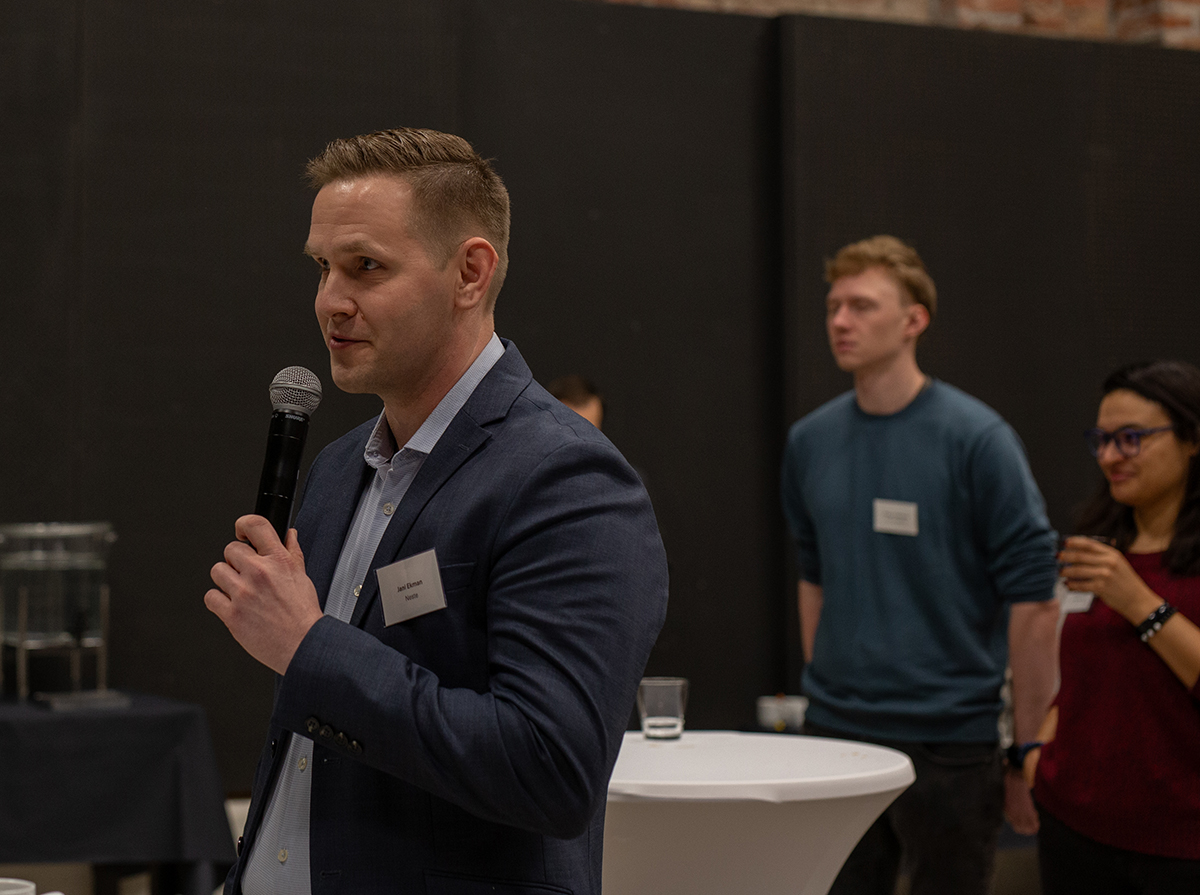
The theme of the event sparked a great deal of discussion between the participants and the speakers. Head of Strategy & PMO of Neste Jani Ekman also gave a speech at the event.In order for the heavy-duty vehicle fleet to be renewed more quickly, the entire electric transport value chain and its cost impacts must be modelled clearly and comprehensibly.
- “Modelling the value chain is important at the national, international and also global level. I consider it to be one of EMRC’s primary missions. At the next New Trends of Electrification event, we will be able to provide rough guidelines for this,” Naumanen promises.
From technological development into business
During the event, which was hosted by Professor of Practice Sami Sykkö from LUT University, plenty of interesting discussions took place between presentations, with delightfully active participation by students from the Master's Programme in Electric Transportation Systems, which LUT University offers in Lahti.

The New Trends of Electrification event attracted a large audience to Malski in Lahti, and the content of the event received praise from the participants.The discussions were also joined by LADEC’s Business Development Manager Pekka Komu, who was strongly involved in organising the event. He said that the event received excellent feedback from the participants.
The event had shifted from the previous year’s focus on technology to concentrating on new business opportunities.
- “Only a few years ago, electric cars were rare, whereas they are now commonplace. A similar change will also take place for heavy traffic, although it will take a slightly longer time.”
According to Komu, there will be no looking back, as the electrification of heavy-duty transport is progressing at a rapid pace.
- “One of the trendsetters among the event participants is Posti, which aims for fossil-free operations by 2030 and net zero emissions by 2040. Kempower is able to implement the charging solutions, while operators such as Neste can handle the commercial operation. The electrification of heavy-duty transport will take time, but it will definitely happen,” Komu sums up.
Text: Taru Schroderus
Photos: Assi Jokivirta
Lahti GEM – Green Electrification of Mobility Cluster – is a cooperation platform for companies, research and educational institutions and cities for the development and commercialisation of green electrification technologies, with almost 50 operators already involved in the cluster.
Watch the video and find out more about the Lahti GEM – Green Electrification of Mobility Cluster!
The events and actions of the Lahti GEM are implemented as a part of the project: GEM Launcher (Dnro. 195/15.00.10.00/2023), funded by the Regional Council of Päijät-Häme and the Regional Support for Sustainable Growth and Vitality (AKKE).